Showing posts with label maturity. Show all posts

Monday, November 11, 2024

Offloading trouble.

In the final days leading up to the election, I heard several things that upon reflection made me think of the famous story by Ursula K. Le Guin called "The Ones Who Walk Away from Omelas." The imaginative premise of the story, in brief, is that there is a city of perpetual happiness and peace called Omelas, but its happy state rests entirely on a dark secret -- that one child be held in perpetual misery and darkness. Everyone else is joyful and free, but that child must remain in a state of sheer horror or the whole thing collapses. 

What brought it to mind was that, over and over again, I would hear from citizens of this free country demanding that the government guarantee so-called positive rights -- a right to food, education, health care, housing -- rather than the negative rights of just staying out of our faces -- not interfering with speech, religion, person freedom, etc. The more I heard this, the more I got to wonder why supposed adults would expect that someone else must always be required to foot the bill for them, and in many or even most cases even to free them from the bare requirements of survival, or even the consequences of their own actions. 

For example, no authority stops someone from being irresponsible over sex. They are free to do as they like. But they also want to be free from the consequences of the behavior. Someone else must pay for the health care, the drugs, the abortion, the child care and all that entails (if they keep the baby). If not, it is unfair and shows the system is corrupt and evil. 

I've heard of no-fault divorces, no-fault insurance, and no-fault claims, but what they want are no-fault lives.


In a way, though, all of us are citizens of Omelas, in the sense that the bulk of our own citizens benefit from the work of other citizens in jobs we would never want to do. Cops, prison guards, firemen, stool sample examiners, high-rise window washers, sewer workers, nurses in Alzheimer's patient wards, teachers in bad neighborhoods, and so on. We'd rather not think about them. We worry more about the garbage than the garbagemen.  

In one way most of are and really can't help but be citizens of Omelas. That is, the reason we are free and at liberty to fight one another rather than fight other nations is because, for all its faults, we still have the finest military in the world. Most of are too old or too young or just not physically capable of going to war. Whether we like to think about it or not, our active military and our veterans have made our largely pleasant lives possible. 

They have also made us proud. They have endured and suffered, in some cases beyond most of our understanding, so that we may have a chance to be happy and free -- even free to ignore who they are and what they have given for us. 

So I want to thank our veterans on this post on this Veterans Day. They really have secured the blessings of our liberty. May God bless them and may our nation be grateful to them. 

Friday, August 18, 2023

Easy childing, hard adulting.

I hear them young whippersnappers complain about the problems of adulting, how they should have been taught to do their taxes and change tires in school instead of learning algebra or cartography. 

I'm actually not going to come down on them too hard. I know they're being flippant, and we all know that the reason we learn a little about a lot of subjects in school is because we have to find the kids who like algebra and cartography and all the other subjects that will not be so useful for the rest of us later on, because someone has to know how to do these things. Also, learning a lot of things in a stressful environment is a great way to learn how to learn, and it's good exercise for the mind. Still, it would be helpful if kids got more practical life lessons in school -- or at home.

And there's the rub. There are strong disadvantages for kids who are not required to do things at home. In the suburban area where I live, no kids are ever seen pushing lawnmowers, regardless of the income level at which they live. Dad rides the mower or they leave it to the pros. I never see kids raking leaves or painting the house or any of the things I used to do with my dad that I hated. 

Further, there are not that many jobs for youngsters, and probably fewer youngsters who would want to do them anyway. Why should they? To save for college? To work all summer and pile up a pittance that won't even pay for three credits in the way-overpriced universities of the present day?

The real loss shows later down the road, in the failure to go through all those miserable jobs and learn how to "adult." 

Do not think that I'm saying kids have it too easy. Actually, in a lot of very crucial ways, they have it worse now. They may have greater material goods than generations past, but they are much less likely to be raised in a solid home with some kind of moral and spiritual foundation. That makes them more susceptible to all kinds of social ills, especially nihilism. 

I get on the anti-nihilism soapbox a lot. It's the main reason we have not vanquished so many other of those social ills. If nothing matters, why do anything? Why achieve anything, except for the most base, egomaniacal reasons? If nothing matters, who cares what you do? Why, really, does it matter if I hurt someone if I want to? Nothing matters means exactly what it says. 

And this too is a product of "bad childing." Kids shielded from all kinds of tough truths become teenagers who are shocked and dismayed to discover the facts of life. They realize they have literally been lied to by everyone about everything -- not just about the Tooth Fairy! They were lied to about how perfect and special they were! (Everyone is special and unique -- only not in the ways egotism tells us. That's a hard concept to grasp when you are thirteen. Or maybe even thirty.) 

It becomes a race to the bottom -- the kids need to eject any hopeful or meaningful ideals before those too are exposed as lies. Nihilism feels true because they now expect the worst. It's a protection against further disappointment. Nihilism is also enticing because promises it freedom and pokes fun at everything. If nothing matters, you can do whatever you want! But in the end, the menu is always the same. 
 

So put them to work around the house. Encourage them to find jobs. Tell them they must commit to extracurriculars, and not bail out when the going gets tough. Establish rules. You can't "give them a sense of pride," pace Whitney Houston, but you can help them earn it. If there's the slightest glimmer of faith in the parents, they should commit to some kind of churchgoing. And by all means, protect the kids from not from the knowledge of harsh realities but from being the victim of harsh realities. 

Coaches say things like "Easy training, hard game. Hard training, easy game." The truth of that is simple to grasp. Well, childhood needs to be a training ground for adulthood, and it does kids no favors to treat it any other way. 

Wednesday, November 30, 2022

We shouldn't... right?

Thinking back on the collapse of SFX and the many, many, many other things lately that are running amok (meaning: stupidly) in our society, I am coming to the conclusion that we have lost the voice of the grown-up in the room. That would be the voice of sanity and reason, the one who stops a bad idea in its tracks by saying, "That's a bad idea."

Or maybe even, "I appreciate your enthusiasm, but allow me to explain why that's a bad idea."

That voice seems to have gone silent, or has just been drowned out. 

I'm sure you can think of many examples. I have a dumb example for you, but I think it's pretty on-target. 

Maturity is not something one thinks of when the topic of comic books comes up, but compared to what we see in the comics and their stories in other media now, the past eras of the form show that at least once upon a time there were some adults somewhere along the line. 


Undoubtedly the high-water mark of the Lee-Kirby era in the 1960s at Marvel was the three-part Galactus saga. Galactus the planet-eater was such an awe-inspiring menace, so massive and impersonal, that he isn't even seen on the first issue in which he appears (above; that big guy is the Watcher). They built up to the danger, and did it slowly, When Galactus is seen -- gigantic, brutally powerful, completely uninterested in the planet and its people he intends to consume, and utterly beyond any power even superheroes can muster -- it's a shocking reveal.  

I heard Kirby once at a comic convention -- back when the whole thing fit on one floor of a New York hotel and no one dressed up -- talk about this famous storyline, how he first created the cosmic Silver Surfer, the herald for Galactus (he gave Stan Lee no credit, by the way). Kirby said he realized that if this Silver humanoid was like Gabriel, the herald of God, then he would have to create a god for the Silver Surfer to serve. And that was the unstoppable, unappeasable, implacable Galactus.

I hate to spoil a 50+ year old comic book, but the only way the Fantastic Four can save Earth in this one is by being given a deus ex machina -- the Ultimate Nullifier, a tiny weapon that inspires fear in Galactus himself. It was one of those classic "I swear I'll blow us all to pieces" moments that comic book readers of the era would not have expected. The good guys always outthought or overpowered their enemies, or both, but against Galactus there was nothing that could be done but use a weapon of ghastly power, even if it meant collateral damage of the highest degree. Galactus agrees to leave and not threaten Earth again if the Fantastic Four turn the weapon over to him. And you can trust him, because even Kirby's villains have their own sense of honor that they will not offend ("So swears Doom!"). 

So it probably would have been a good idea to let Galactus be for a decade or so after that. But of course, Marvel couldn't; the trilogy had been too good for sales. Fans wanted more Galactus! So the next thing you know, Galactus was back on Earth looking for his herald, or Thor was off in space looking for Galactus, or Galactus was back for a second bite of the Big Apple, and so on and so forth. And yet for a long time, even while not always the most powerful entity in Marvel's pantheon, Galactus was treated with great awe.

Then the new kids started writing books. Guess who defeated Galactus more recently?


Yep, Squirrel Girl.

Now, I don't want to pick on Squirrel Girl; there's always been room in the comics for lighthearted characters. That's how they got the name "comic" in the first place, as reprints of newspaper comic strips. And SQ has some genuine superpowers -- leaping like a squirrel, climbing like a squirrel, talking squirrel talk, and I guess the proportional strength of a squirrel. 

But you know someone in the edit room one day said, "You know who Squirrel Girl should fight....?"

"Who? Doctor Doom? Ha ha ha ha."

"No... Galactus!"

Much laughter -- then, silence. Then, "Seriously?"

"Yeah... Why not?"

"Nah, we shouldn't."

"Yeah... But why not?"

"Because he wouldn't even notice she was fighting him!"

That last line was what the mature -- or mature-adjacent -- person in the room would have said, but these people don't exist anymore. Instead it would be...

"Okay, so how's she gonna beat him?"

"She'll... she'll talk to him. Lookit, he's probably lonely, right? Been around as long as the universe, even longer, actually, and everyone's always mad at him. Wah, you stole my boyfriend to be your new herald. Wah, you ate my home planet. Wah, you parked your humongous ship on my house. He needs a friend!"

So, good-bye awe, hello the first buddy Galactus has had in 14 billion years. The might G-Acty reduced to a 1980s episode of Strawberry Shortcake

(And don't even ask about Galactus's daughter....)

The problem is that this kind of thinking doesn't just happen in comic books. It happens everywhere. It's happening in boardrooms and banks, funeral planners and hospitals, palaces and churches. Not one idea however stupid gets defenestrated; instead they get adopted. No one knows how to say no to something that sounds cool, or at least different, no matter how horrible it is. They're afraid of missing out on the next Apple, or Google -- or worse, at the chance to be further out into politically proper insanity so they can look back over their shoulders at their fellows with contempt. 

This is how jaded people who don't believe in anything bigger than themselves behave. It's especially fun for them when they're playing with your investments or your nation or even your faith in God. They aren't at all afraid that someone will say, "That's that idiot who believed in SFX crypto! That kids under 10 should have puberty blockers! That Jesus technically was trans, and that BDM teddy bears with little children should sell clothes! That what people ought to have in the movies is more wokeness, good and hard!" 

And why would they fear it? The others whose opinion they care about are just as idiotic as they are and believe in all the same things. 

Every time you see something like this in the world, you know once upon a time someone would have told them to knock it off long beforehand and explained why. 

My argument today was going to go from the ridiculous to the sublime, but nowadays it's just ridiculous to more ridiculous. For more outrage at the behaviors of our societal titans, you can't do better than Andrew Stiles in the Free Beacon last week. I just wanted to add my two acorns, as Squirrel Girl might say. 

Saturday, October 24, 2020

My inner eight-year-old.

We interrupt this thoughtful blog in its usual considerations of philosophy, current events, and literature to bring you this stupid picture that tickles the little eight-year-old Fred within. 


The awning is apparently Photoshopped; I can't tell you how sorry I am to report that. But even with my knowing this, it still got the Butt-Head (from Beavis & Butt-Head) laughs out of me. Huh huh... huh huh... huh huh...

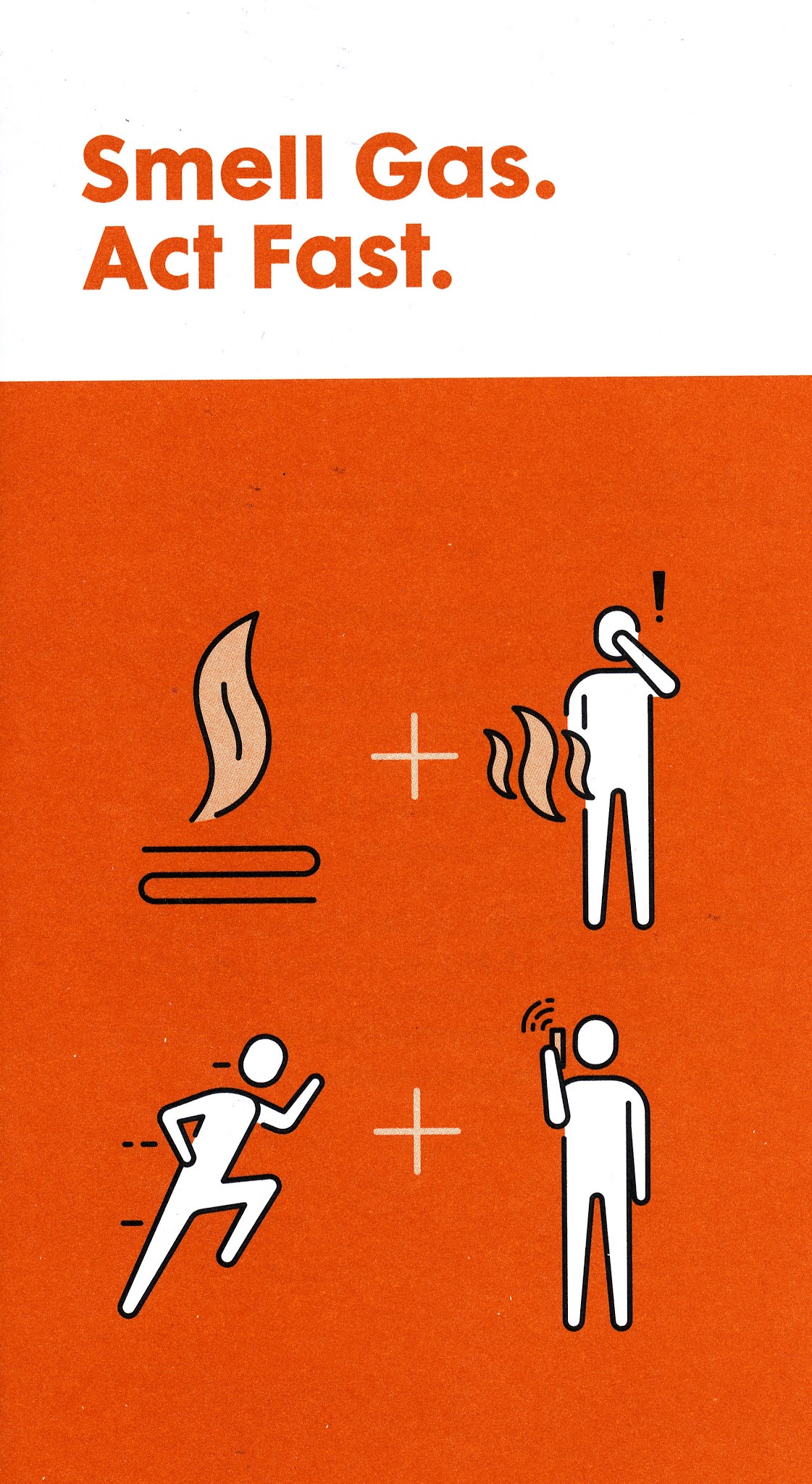
Sadly, despite my career as a dazzling urbanite and a shining sophisticate, at heart I am still a child who laughs at this kind of semi-scatological humor. Take, for example, this flyer that came with the gas company bill for the month. 


Now, I know a gas leak is nothing to laugh about. It can explode, burst into flame, or just suffocate you if it's feeling kindly. And I understand that the gas company is trying to use simple figures here for the sake of people in our area who don't read. These symbols, as explained inside, mean Gas - Smell - Run - Call. Easy to remember. 

Ah, but oh so easy to use for humor purposes. 


See what I mean? I don't think this is what they mean by being "young at heart," but it's all I got and I guess I'm stuck with it. 

Or should I say "young at fart"? Huh huh... huh huh... huh huh...

Wednesday, June 13, 2018

Character?

[NB: This was an entry I had written for the old, defunct Blog.com blog five or more years ago. I came across it on my hard drive and didn't know why I'd saved a copy. But I think it still holds up.]

While reading an article about social media and the oversharing generation behind mine, I thought about how many of the youngsters will come to regret their youthful exuberance, having written too much about themselves in public, and the impact it had on careers and relationships.


And I thought about their possible response to that proposition, as the kind of thing I would have thought in my youth: This is who I am, we’re different from you old guys, I find this right and proper and so I will never have to change my opinion, etc.

The ability to take up big gestures and poses is important for the youth, even over frivolous things. And although they won’t believe it, their opinions about these things may change, and possibly a sickly regret will sink in—even shame. The problem is the important things they stand for also may be revised.

It’s not a problem because they change their minds about taste or politics or best practices or even ethics or religion; any thinking person is entitled and expected to be able to do so. The permanent record of the Internet makes it harder to change direction; no one wants to look like a waffler. And yet that can be overcome if one finds that truth has dispelled his illusions (or, it should be said, vice versa).

The real problem is when they abandon principles because of frustrated expectations.

When you’re young you think you’ll do great things and be thought of highly by many, and so you may be willing to pay a high price for some decisions, certain you’ll be proved right in the end. The career passed by for love of something unremunerative; the marriage straight out of high school; the protest movement or general strike or even act of violence; even the rebellion against those closest to you have the romantic tinge that whispers of future justification. It may reflect great depths of character to do some of these things, or at least appear to.

(You may note I left joining the military off the list; for one, it’s something of unquestionable nobility, so I do not dispute that; for another thing, it brings with it all the rewards of discipline and honor that I hope make it an unregrettable decision.)

But when the great gesture does not work out? When the acting career derails, the protest is ignored, the marriage sags into misery, and no one around really cares? Is it like the tattoo that one gets more out of emotion than reason and comes to regret? The harmony of romanticism ends, and the dream dies hard, and (here’s the rub) takes the character down with it.

Or was it even character?

How many young people would choose to do something grand if no one would ever know about it? There’s always a sense of playing to the audience. The old definition of character remains: doing the right thing when no one is watching. If your dream fails and you turn bitter, cynical, even angry, then it’s hard to say it was character at all. Just youthful ego. It’s like being someone who is bound to fight for justice, then taking a hard punch, and, while on the ground, wondering if justice is all that important after all. (Which is why a good punch is always helpful for developing humility. People without any humility are, as a rule of thumb, jerks.) You may decide that, although you were right all along, the world has treated you badly and so you deserve whatever you can swipe from it. So there, world!

But what about old-timers who survive success or failure or both and retain a good outlook and a desire to do things right? They have character, and it is solid. Those people can be counted upon to do right.

So young people must be distrusted until they prove that their character outlasts their romanticism. You can’t trust the character of someone who’s never taken a punch.

Never trust anyone under forty. As for people forty and over, you can tell which ones are bastards—the angry people and the people who have never had to endure failure at all—and distribute your trust accordingly.

Thursday, July 20, 2017

Lawn in the tooth.

Continuing the theme from yesterday's post....

While music on the iPhone was keeping me company as I was struggling through the near-fatal mowing of my lawn, I got to thinking about the way music has been written, packaged, and marketed universally to the immature and the immature of heart, including your correspondent here. It's become a commonplace to laugh at geezers singing "Won't Get Fooled Again" now, while waving their canes and Social Security checks. Oh, yeah, gramps, that's right. Fight the power. Guess what: You ARE the Man.

Knowledgeable critics like Mark Steyn write often about the infantilization of American pop music, and yet if we look back in the history of popular culture we find that even when our popular music was intended for all ages, cranking out songs about Mom and exotic places and the old country and patriotism and making fun of others, it probably most often dealt with those perennially popular youth topics, like love, romance, moonlight, novelty dances, and such. These may make great songs, but they're not songs of the middle aged.

And that's why music has in its way become a drag on the culture. We can't grow up because our hearts are in our youth, and the music of our youth, whenever that happened to occur. It's one reason for our wacky politics nowadays--no one has the cultural muscle to deal with serious consideration and difficult choices. That's dull old-folks stuff.

No one is writing songs about paying the mortgage, sustaining commitments, achieving success after decades of toil, empty nests, or cutting the freaking lawn. Youth is written in poetry, I suppose, but life is mostly written in prose.


Until now!

I certainly don't have a solution for our maturity shortage. We all have to come to grips with it as we age. Growing up is hard, which is why most of us try the hell not to. All I can do is provide some lyrics for use by crafty tunesmiths for songs of more common middle-age concerns, like:

MOW THE LAWN

Grass grows high
The wife complains
Neighbors think I've gone insane
Kid just sulks
Won't do crap
But the dog did all over the map
Mow the lawn!
Kill the weeds!
Cut those things like you make 'em bleed
The grass has blades!
And it fights back!
Pull my cord and start the attack!

[chorus]
MOW THE LAWN
MOW THE LAWN
MOW THE LAWN

[drum solo]

Okay, well, it does bring to mind Zevon's "Model Citizen," but at least it's not about diapers or periodontal surgery or Viagra.

So my question to you is: Can you think of any pop songs that celebrate the events of life beyond the ones we associate with our teens and twenties?

Friday, March 6, 2015

Old folks.


I've noticed that how we deal with old people in general has a lot to do with how old we actually are, maybe more than how old they actually are. As you creep toward oldness you think about these things.

From my experience and my observation of others, here's how I see it breaking down. Your mileage may vary. And remember, it's not the years, it's the mileage.

BABY
In as much as you are aware of anyone outside yourself, you like old people. You're both bald, incontinent, gassy, toothless, occasionally cranky for no reason, and can be perfectly happy when things are soft or quiet. But Mommy still rules. Old people rating: A-

TODDLER
The old people in your life are AWESOME. Grandma and Grandpa will do anything for you. They don't have to work, so when you're around they're all yours. Old people rating: A+

CHILD
Old people still want to spoil you rotten, which is excellent! But they're also starting to expect things, which sucks. They don't like the way your parents are letting you get away with stuff, not like when they were kids, and they can be really irritable and tied up with their own silly problems. Hey, Grandma, if I'm a brat, who spoiled me? Old people rating: B-

TEENAGER
Old people are kind of okay. At least they're not your parents. In fact, one thing you have in common with old people is that they hate your parents' generation too. That's got to count for something. Old people rating: C

YOUNG ADULT
Old folks are a waste of time. You want to go go go! and they want to moan moan moan. They smell, too. The only reason you can stand seeing them is you hope to get a good story for your friends, who are the most important people on earth. Old people: the sooner they croak, the better. Old people rating: F

SETTLED ADULT
Amazing how much better the old timers are all of a sudden. They're willing to babysit! That excuses everything else ever. Sometimes the things they say actually seem to make sense. Not often, but sometimes. Old people rating: C+

OLDER ADULT
Thank God for old people. They know the score. They've survived so much. And they're still around. They prove that you can live through things and not die. That's very comforting. And you'd rather go to their funerals than your own. Old people rating: A-

OLDSTER
These are your people, your contemporaries. You grew up with them, you love them. But because of that you tend to judge them as people, not a class, and you can't believe how some of them could get to be this age and still be so frigging stupid. Familiarity breeds contempt. Old people rating: B-

REAL OLDSTER
You're not quite sure you're old. You think you're more like those babies. But no one thinks you're cute. Oh, well. The old people around are respectful, at least. Or fearful of your grim visage of their own face yet-to-come. Old people rating: A

Sunday, November 23, 2014

Manly supplements.

Further to yesterday's post on Fred's manliness:

CVS was having a sale on some vitamins.


Three dollars off; buy one get another half price. Sure, what the hell.

I take a multivitamin daily. I know some dietitians think they're unnecessary, but vitamin deficiency is definitely a danger. It would be best to get all the vitamins from food, but Fred's a busy guy, you know? Besides, this is chewable; that makes it a food, right?

It's hard to feel super manly about a product that includes both "Men's" and "Gummies" in the name.

"Why does everything have to be gummies now?" asked the lovely Mrs. Key.

"Maybe a lot of people have trouble taking pills," I suggested.

"Your vitamins shouldn't stick to your teeth."

"Despite being gummy, they don't stick to your teeth."

I'm a little confused about what to make of this turning-vitamins-into-candy phenomenon too. I can understand it for kids, to get them to take their meds, although we've been teaching kids for decades that medicine is not candy, while we make pills for them (that are dangerous in large doses) into candy. Okay, I'm not going to begrudge parents things that help them get the children to take vitamins, if the parents are very careful. And I enjoyed my Flintstone vitamins way back when. But why do we adults need to bribe ourselves with candy vitamins? (Mrs. Key agrees, although she thinks the inventors of Viactiv were robbed at Nobel time.)

There's a commercial for Bayer's One a Day VitaCraves ChewyBites---brownie vitamins!---that has a grown man dancing around while he hallucinates a party after taking one of these pills. It's like one of those ads for kids that have weird, fantastic things happen when kids eat a particular snack treat or breakfast cereal. Do grown-ups need this kind of enticement?

Maybe. I don't know. I bought the gummies because they were on sale. And I thought they'd taste like candy. But they taste kind of like chewing an old-fashioned little yellow One a Day.

I'm not really your go-to guy with maturity issues.

Wednesday, October 1, 2014

Blog for great Justice.

I was a huge fan of the Justice League of America in the old days.


Okay, not that old---that issue of The Brave and the Bold, which was the first comic to feature the Justice League, goes back to 1960; your man Fred was not born yet. Although when I got to collecting later in life I did buy a lot of the 1960s JLAs. Interesting to note that DC's two big powerhouses, Batman and Superman, were seldom seen on the covers in the early years of the book, even though they were members of the club. The editors of the Batman and Superman titles didn't want to lose sales to JLA, so they asked that their guys be kept off or kept small on the JLA cover.

Anyway, when I got the iBooks app I got a free download, and being a retired dork who sold his comics years ago, I almost resisted the temptation to see the new iteration of the JL (no more A---they'll justice you wherever you go). But I gave in.


A lot of comics readers like to make fun of the old Silver Age DC books, and it's true that they were written for children, and also that under the Comics Code Authority rules there was a lot of dopiness in the comics. And, obviously, comic art style was less concerned with anatomical correctness in those days, and the authors less concerned with character development. But most of the time the comics were non-goofy. The Justice League of America faced serious threats. Starro, pictured above, was a big starfish, yes, but he was a perfect 1950's-era movie monster of the type Jack Kirby was cranking out for Marvel at the time, threatening on his own as a big bastard but also capable of spawning gazillions of starfish that would latch on to humans and control their minds.

The new Justice League book I downloaded, part of DC's 2011 "New 52" reboot, was in some regards better than I thought it would be. The characters are interesting. Wonder Woman, newly arrived from Paradise Island, is an alien to the human world, charming and lethal as a Greek mythological hero would be. Green Lantern's as cocky as a test pilot; the Flash (Barry Allen not dead anymore!) is a law-and-order guy at heart. Batman, of course, kicks butt, even though the others can't believe he does it without superpowers. And Superman is still the baddest boy in town.

But the irony is that the 1960 book, which was aimed at children, had some grown-ups in it; the new book does not. Comics today are supposedly aimed at adults, but the characters in them all seem to act more like surly fifteen-year-olds. In this first installment, the heroes spend a lot of time posing and physically assaulting one another. The military is after these new vigilantes, and has decided to shoot first and not bother with questions ever. The only people destroying more property than the military are the heroes. The villains are barely evident in this issue. Batman is the closest thing to a mature individual here---maybe he's seventeen.

My experience with policemen and our military is that those who actually work in dangerous situations do not spend their time in pissing contests, flexing their muscles, treating civilians like dirt. That's what movie cops and movie soldiers do. The real ones behave more like the original JLA, making personal issues invisible to deal with threats.

I developed some of these themes in my book Cobalt Agonistes, but I wrote with great affection. I spent an awful lot of my formative years and beyond reading comic books, and not because I was doing sociological research. It was because they were fun, they were escapism, and probably because I wanted to smash something. If I had discovered modern comics as a teen, I would have loved them, even with all the sex and soap opera stuff that goes on. Maybe especially the sex.